Between my vacation, and the big BBQ on the long weekend, and now my friend Jaclyn coming to visit, May--as always--has been a whirlwind!
I've baked some goodies, but haven't gotten around to posting them yet...but they're coming! I promise!
Showing posts with label fail. Show all posts
Showing posts with label fail. Show all posts
Tuesday, June 1, 2010

Monday, March 22, 2010
Technical Difficulties
Sorry for the delay folks, but I've been down for the count for a few days while I recover from some chest-cold-lung-infection-type thing. I'm behind on my baking, but I promise that 31 cookie recipes in March will be delivered!

Thursday, March 4, 2010
March 3: Meringue Cookies
I knew that life would get in the way of my little project at times, and tried as much as possible to schedule around it (concerts, weekends away, Tuesday night appointments). However, when you forget that you have theatre tickets for 8pm and your baking time is limited to 7pm - 11pm, it sort of puts a fly in the ointment. doesn't it!
I figured I'd make Meringue Cookies when I got home because it's just egg whites and sugar, and I could bake them off before the show. No problem, right? Except the TTC decided to be slower than molasses on the way from Eglinton to College (that 10 minute subway ride took almost 40 minutes!!), which gave me about an hour and a half to whip, pipe and bake. Oh, and eat dinner too.
Yeah.
The meringues were supposed to bake for at least an hour and a half at 200F, and not wanting to have to stay up late when I got home I decided to try the method I remembered my mom using when she made these when I was a kid. I let the oven heat up to about 450F, turned it off and left my meringues to bake while I went to see My Mother's Lesbian Jewish Wiccan Wedding (and was not disappointed).
At first glance they were perfect:


Unfortunately, I think my meringues were a little too big, because when I got home they were crispy on the outside, and the middle had flopped leaving a hollow shell and a chewy bottom:

Oops.
Of course, to taste them - they're delicious! I can even get on board with the chewiness...however you can't leave a moist middle like that, because it will make the rest of your meringues soggy within a matter of hours. Since sugar is hygroscopic, it will draw moisture from anything near it containing moisture (that's why those clay discs you soak in water keep your brown sugar moist). The dry outer shell will attract the moisture from the middle of the meringue, causing the shell to become moist and chewy--in a bad way--too.
So, back in the oven they've gone, in the hopes that any remaining moisture will be banished. Even if they become dry as a bone though, my cute little meringues will be delicious, but ultimately hollow.
Kind of like this guy:
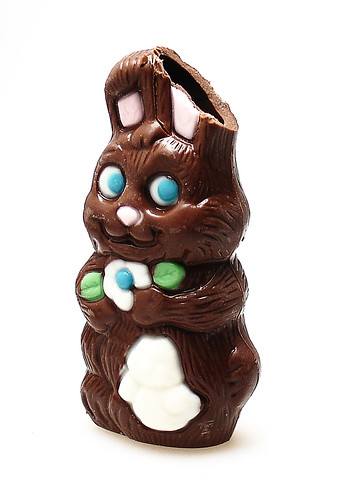
Another mulligan! Learn from my mistake and give these Meringue Cookies the proper long, dry bake they deserve. Speaking of long bakes, 62 sleeps until Puerto Plata!
To order these "Cookies for a Cause" (don't worry, I'd make you new ones!) please click this link to donate at my Daily Bread Food Bank fundraising page.
Wednesday, March 3, 2010
March 2: Scottish Shortbread
It's only Day 2 and already my first FAIL. Well, I wouldn't call it a complete and utter flop, but this recipe certainly didn't go as smoothly as I'd have liked. That's why it's Ms. Adventures, folks!
When a dough is "short", it means that the high fat content inhibits the strengthening and elongating of gluten strands (read: it shortens them). If you think of gluten as the bones of a baked good, high fat weakens these bones (or rather, prevents them from forming in the first place) resulting in a crumbly product. That tidbit was brought to you by Bakehouse Rock!*

Now, "superfine" sugar is a rather ambiguous description. Does it mean the finest grade of granulated sugar? Does it mean confectioners/icing sugar? Well, given that I've seen other Shortbread recipes that called for icing sugar, and I would certainly describe it as "superfine" I decided to go with that. This move turned out to be the Albuquerque to my Bugs Bunny.
The resulting dough was a crumbly mess that just wouldn't bind together--despite my adding an extra 1/4 cup butter--let alone lend itself for rolling and cutting. Not wanting to give up, I pressed the mess into my 10" round tart pan, docked it (lightly pricked the dough with a fork ) and hoped for the best. Worst case scenario, I've got a tart crust!
After baking I sliced the cookies into triangles before the dough cooled and set, and allowed it to cool completely within the pan. Results:

- Aroma: This certainly smelled like shortbread! The sweet buttery aroma caused a reaction that filled my whole mouth with saliva.
- Taste: I give it a 3 out of 4. A nice buttery and sweet taste without being cloying, but I could also taste the flour. This is a no-no.
- Texture: It's crumbly all right, but it's also a little tough. This is where the main failure of the dough lies, in my opinion. This could be the result of several things:
- I over-kneaded the dough. The recipe said to gradually add flour and knead until the dough no longer sticks to your kneading surface (in this case, my marble slab). Perhaps I should have stopped adding flour when this happened, even though that meant not using the full 2 1/2 cups.
- The quantity of starch in the icing sugar. In a plot that I can only speculate was conspiratorially designed to bolster the Canadian corn farming industry, Canadian icing sugar contains up to 5% corn starch. Now I can understand in a humid country this might be necessary to absorb moisture from the sugar to prevent clumps, but Canada enjoys a mere two months of almost humid climes, instead opting to submit to its two other seasons (winter, and "construction"). Essentially, by using icing sugar instead of granulated sugar, I was introducing more starch to the dough, to its detriment. To account for this, I should have reduced the amount of flour, but of course, not knowing exactly how much corn starch was in the flour, I wouldn't know how much to reduce the flour by.
- The ratios were off. Equal parts butter and sugar? Next time I'll try the traditional 1-2-3 ratio.

Final grade: C. I think I will mulligan Shortbread on the weekend. If you want to try succeeding at this recipe where I failed, you may find the Scottish Shortbread recipe on my Recipes page.
To order these "Cookies for a Cause" (don't worry, I'd make you some new ones) please click this link to donate at my Daily Bread Food Bank fundraising page.
*I can't decide which is worse, these Shortbreads, or my Photoshop skills.
Subscribe to:
Posts (Atom)